What's Involved In A Rental Appraisal?
In a constantly evolving rental market, knowing how much rent your investment property should be returning can be difficult. Rental prices fluctuate with tenant demand, local supply and changing market conditions, making it important to understand where your property sits. One of the best ways to determine its potential rental income is to have it appraised by a qualified and experienced property manager.
A rental appraisal is a relatively straightforward process that combines an inspection of your property with research into comparable rentals in the local area. The result is an estimate of the rent your property could reasonably achieve, helping you make informed decisions about your investment.
What is a rental appraisal?
A rental appraisal is an assessment of a property's potential rental value. A property manager considers the property's features, condition and location before comparing it with similar properties currently available for rent or recently leased in the surrounding area.
The assessment provides a rental price guide based on the available evidence and the manager's knowledge of the local market. While it is not a guarantee of the rent you will receive, it gives property owners a useful starting point when setting a rental price, preparing to lease a property or reviewing an existing investment.
What is a rental appraisal used for?
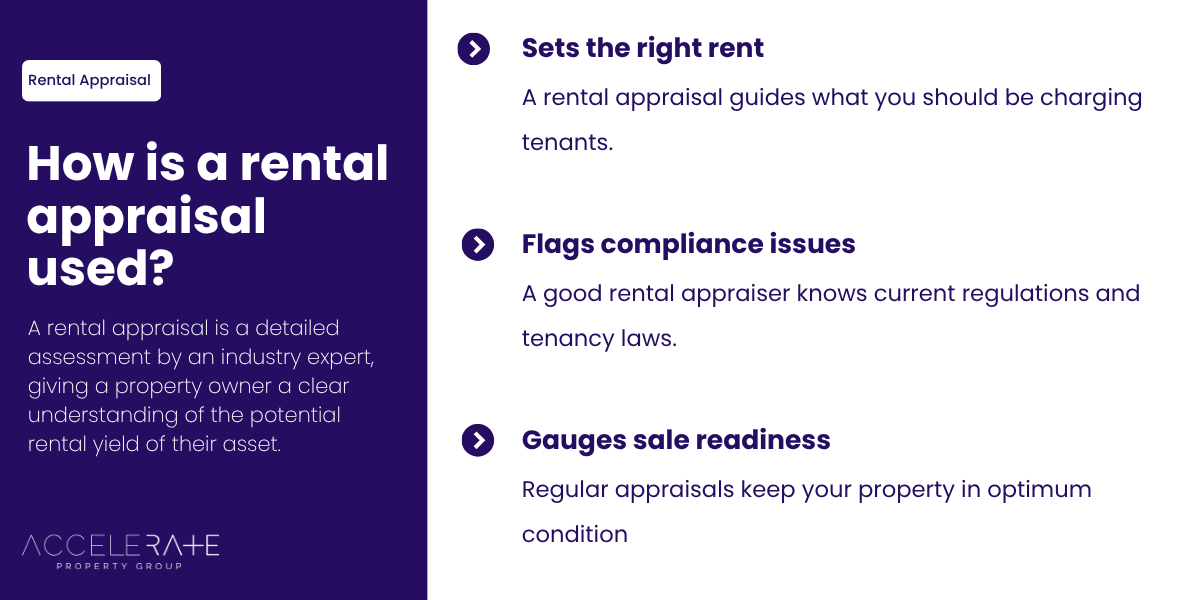
A rental appraisal helps landlords understand what they could reasonably charge tenants and whether their property is positioned competitively within the local market. Setting the rent too high can discourage suitable applicants and increase vacancy periods, while setting it too low may mean missing out on potential rental income.
An appraisal can also identify opportunities to improve the property's appeal before it is advertised. A property manager may suggest addressing maintenance issues, refreshing tired interiors or making practical improvements that could attract more tenants. Any proposed work should be considered against its cost and likely benefit.
Regular appraisals can help landlords stay informed about changing rental conditions, identify maintenance priorities and review their investment strategy. If you are considering selling in the future, understanding the property's rental performance can also help you assess its role within your broader financial plans.
How long is a rental appraisal valid for?
A rental appraisal does not have a fixed expiry date. Its usefulness depends on whether the property's condition, features and surrounding rental market have changed since the assessment was completed.
Rental demand, available housing supply, interest from prospective tenants and broader economic conditions can all affect achievable rents. Changes to the property itself, including renovations, repairs or additional features, may also influence its appeal.
For this reason, landlords may find it useful to review their rental appraisal every six months, particularly in a changing market. An updated assessment can help you understand whether your property's rental price remains competitive and whether there are opportunities to improve its performance.
Factors considered in a rental appraisal
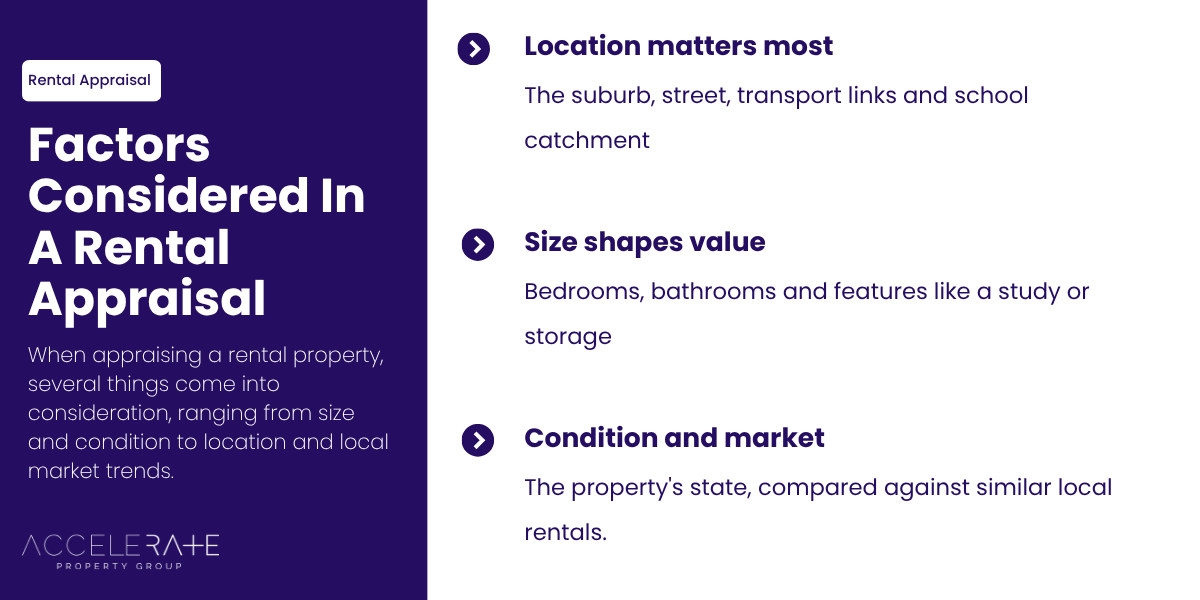
A rental appraisal considers several factors, including the property's location, size, condition, features and the level of demand for similar rentals. These elements are assessed together to establish a realistic rental price guide.
Evaluating the property
During an inspection, the property manager will assess the property's overall presentation and the features that may influence tenant demand. This includes the number of bedrooms and bathrooms, living areas, kitchen, storage, laundry facilities and any additional features such as an ensuite, balcony, courtyard, garden or dedicated study space.
The condition of the property is another important consideration. The assessor may look at the quality of internal and external paintwork, flooring, fixtures, fittings, landscaping and general maintenance. A well-presented property that is clean, functional and maintained may appeal to a broader range of prospective tenants.
Location also plays a significant role. The property manager will consider the suburb, street and surrounding environment, including access to public transport, shops, schools, parks, medical facilities and other local amenities. Convenience, neighbourhood appeal and the availability of similar rental properties can all affect the rent tenants are willing to pay.
Researching the local rental market
After assessing the property, the property manager researches comparable rentals to understand how it measures up against other options available to tenants. This may include properties with a similar layout, number of bedrooms, condition and location, as well as recently leased properties where reliable information is available.
The manager will also consider current rental supply, tenant demand and recent market movements. Comparing these factors helps establish a rental price guide that reflects local conditions rather than relying solely on the property's features or the landlord's expectations.
Does high property value automatically mean a high rental appraisal?
No. A property's sale value and rental value are influenced by different factors, so a more expensive property will not necessarily achieve a higher weekly rent or rental yield.
Rental value is influenced by tenant demand, local demographics, property layout, the number of bedrooms and bathrooms, and access to transport and amenities. For example, a property in a prestigious location with a large garden may have a high sale value, but renters in that area may place greater importance on additional bedrooms or proximity to a train station.
In this situation, the property may be valuable from a sales perspective without commanding the highest rent relative to its purchase price. This is why a rental appraisal should be based on comparable rental evidence and local demand rather than the property's estimated sale price alone.
How do you arrange a rental appraisal?
Arranging a rental appraisal is a straightforward way to understand your property's potential rental income. A property manager can discuss your investment, assess its features and research comparable properties to provide a rental price guide.
Whether you are preparing to lease a property for the first time or reviewing the performance of an existing investment, an appraisal can help you make informed decisions about pricing, presentation and future improvements.