As a landlord with a property being managed by a third party, you want to have confidence that they're doing a good job of overseeing the daily operations, financial administration, and maintenance of your rental property.
The property manager is the conduit between you and your tenant and the last thing you want is not only for the property to be poorly cared for, but your tenants becoming unhappy due to the condition of it, poor communication or the way they are treated. That's why sometimes it's wise to not simply assume your manager is doing the best job possible, and change your property manager if things aren't being handled properly.
Signs it's time to Switch Your Property Manager
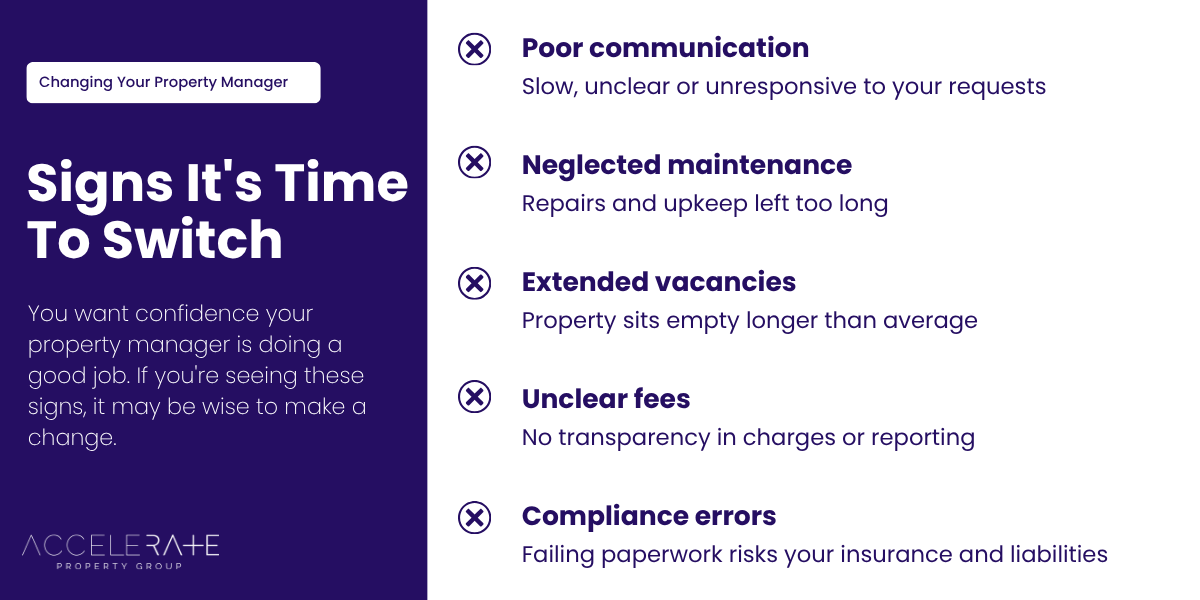
1. Poor or Slow Communication
A good property manager will communicate with you clearly and regularly so you know what is going on with your property, any work that has been done or is required, tenant feedback and guidance regarding real estate trends that may impact your asset. They should also be responsive to your requests and those of your tenant.
2. Neglected Repairs and Maintenance
Once identified and approved by you, repairs should be conducted as soon as possible. Ongoing maintenance, such as gutter cleaning, painting of walls and fences or other general care should be done at regular intervals to avoid unnecessary or costly repairs caused by poor upkeep.
3. Extended Vacancy Periods
While vacancy periods will vary according to the property market and the number of rentals currently available, if your property sits vacant for longer than the average or has frequent periods without a tenant, then your manager may be underperforming. Ideally, they should provide you with plenty of notice of a lease ending or being terminated and they should also be advertising the property as early as possible to minimise any vacant time.
4. Unclear Fees and Financial Reporting
There should always be transparency in the fees, additional costs and financial reporting. All charges must be clearly noted with accompanying invoices for any work done to the property.
5. Compliance and Legislative Errors
If your property manager fails to maintain appropriate governance and legal compliance, then it may impact your insurance and liabilities. It's paramount that your property manager does all the necessary paperwork and acts in a manner that follows regulations and industry standards.
Can You Change Property Managers Mid-Lease?
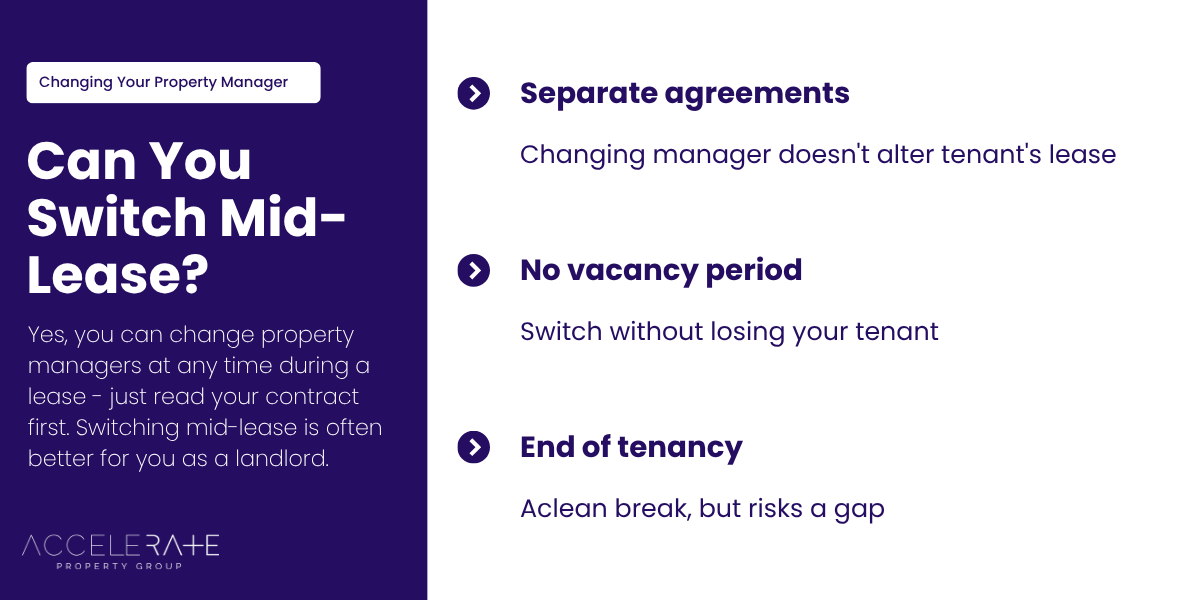
Yes, you can change property managers at any time during a lease. However, be sure to read your contract to ensure you abide by the agreement you have in place.
Switching Mid-Lease
The management contract is a separate agreement between you and the agency, whereas the lease agreement is between you and the tenant, so replacing your manager does not alter or restart the tenant's lease. This is why a mid-lease change is better for you as a landlord, as it means there's no vacancy period while you find a new property manager.
Switching at the End of a Tenancy
Switching at the end of a tenancy might seem better, however it will mean not only will you need to find a new property manager, but they will then need a period of time to find a new tenant for your property. Unless, of course, you already have a replacement managing agent ready and the current tenant is happy to continue with a new lease.
How to Switch Your Property Manager
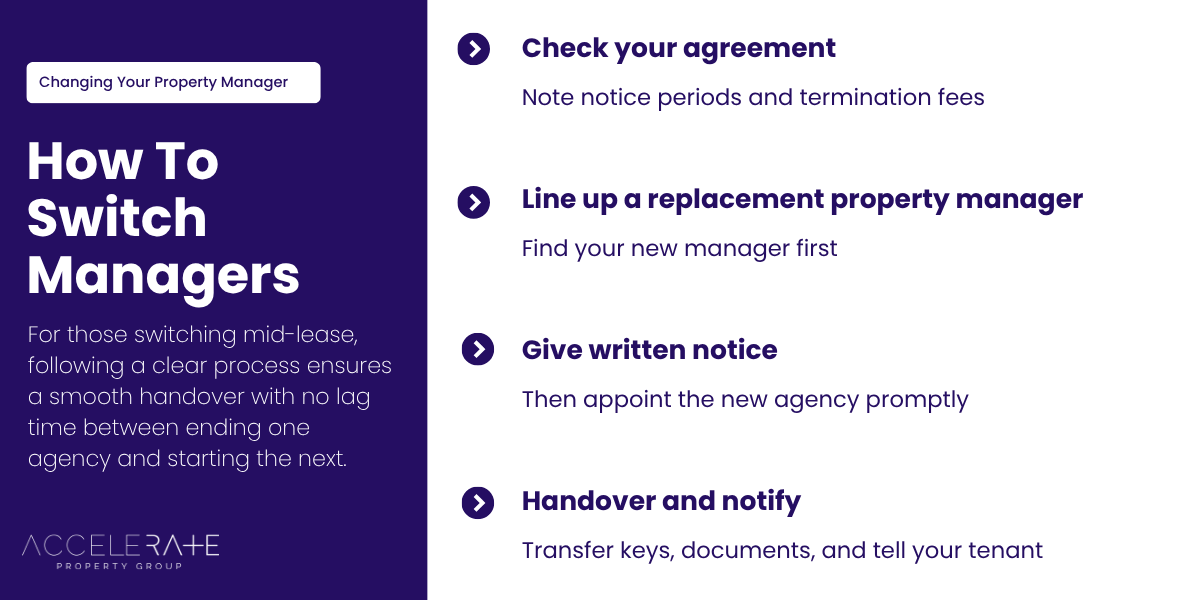
If you are looking to switch property managers at the end of a rental period, then it's a clean break and you simply switch. However, for those looking to switch mid-lease there is some best practice advice below.
Step 1: Check Your Management Agreement
Your management agreement will outline the duration of the agreement (Typically 12 or 24 months), the notice period you need to give if you are terminating it early and any potential termination fees.
Step 2: Find Your New Property Manager
Prior to ending your current agreement, find a suitable replacement that has good online reviews or comes recommended from reliable sources. You don't have to sign a contract with them just yet, but make sure you have them lined up and a tentative agreement that you are comfortable with.
Step 3: Give Written Notice to Your Current Agency
After checking your contract, provide written notice to your current agency informing them that you wish to end the agreement. As soon as you have done this, start the formal process of appointing the new agency so there is no lag time between ending one agency and starting the new.
Step 4: Arrange the Handover of Documents and Keys
You can either manage this process on your own, or get the newly appointed property manager to do this step. Make sure all documents are properly executed and that all keys or swipe cards are present.
Step 5: Notify Your Tenant of the Change
Once the new property manager is in place, either you or they should let the tenant know of the change and share with them the new contact details and any information regarding changes in processes for payments, complaints or other communication.
Step 6: Confirm Rent, Bond and Trust Account Transfers
Make sure that all accounting details are accurate and payments, such as bonds, rent or trust account transfers, have occurred.